Cultivating Capital: What an Allotment Can Teach UK Investors in 2026
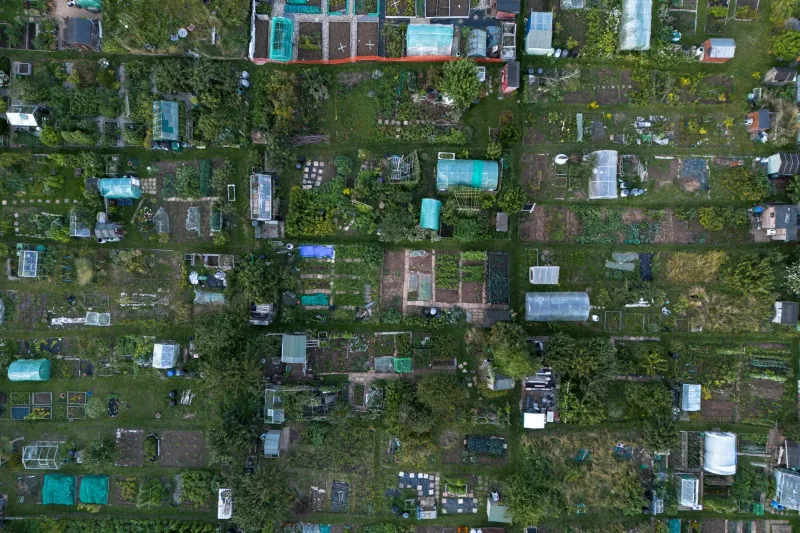
At Tiller Invest, we often return to a simple idea: successful investing is closer to cultivation than to speculation. An allotment is not a get-rich-quick scheme. It rewards preparation, rotation, patient pruning and a willingness to ignore a bad week of weather. The same habits can help UK investors think more clearly about portfolios in 2026, when headlines are noisy and the temptation to intervene is strong.
Start with the soil, not the seed catalogue
Every allotment holder knows that the most exciting part of the year is the seed catalogue. It is also the least useful place to begin. Soil, drainage, aspect and available time matter more than the glossiest new variety. Investors face the same temptation when they begin with a product, a theme or a headline rather than with their own circumstances.
Before choosing investments, establish the basics. What is the money for? When might it be needed? How much risk can be tolerated without losing sleep or abandoning the plan at the first storm? A robust cash reserve sits outside the portfolio for near-term needs, while a stocks-and-shares ISA or pension can hold longer-term growth assets. The wrapper should follow the goal, not the other way round. In 2026, with UK households still adjusting to higher borrowing costs and uneven household budgets, that discipline matters. The first job is to make the plot fit for purpose.
Rotate crops rather than chase the prize marrow
A productive allotment rarely depends on one crop. A grower who plants only tomatoes may enjoy a wonderful summer and a disastrous blight year. Diversification is the financial equivalent of crop rotation: it does not guarantee a good season, but it reduces the chance that one failure ruins the whole harvest.
For UK investors, diversification should be genuine rather than cosmetic. Holding five different global equity funds is not necessarily diversification if they own the same underlying companies. A sensible structure might use a broad global equity fund inside a stocks-and-shares ISA for long-term growth, short-dated gilts or a money-market fund for stability, and cash for expenditure that is close at hand. Gilts can play a useful role because they are backed by the UK government, but their prices still move when interest rates change. That is why duration matters, a point we return to below. The aim is not to own everything. It is to own assets that behave differently enough to be useful.
Prune with discipline: rebalancing is not fiddling
Pruning can look severe to a nervous gardener, yet it is an act of care. Cutting back growth directs energy to where it is needed. Rebalancing performs a similar function in a portfolio. When one part of the portfolio has grown faster than the rest, trimming it and adding to laggards restores the intended balance. It also imposes a modest discipline: selling what has done well and buying what has done less well, without pretending to know what happens next.
Investors can rebalance at set intervals, perhaps annually, or when allocations drift beyond agreed bands. Inside an ISA or pension, there is generally no capital gains tax complication from switching investments, although platform charges and dealing costs still apply. Outside tax wrappers, the calculation is less tidy and should be handled with care. The important point is that rebalancing is a pre-agreed maintenance task, not a reaction to a headline. A gardener does not dig up the plot because the forecast changed on Tuesday.
Weather is not climate
In 2026, UK investors continue to weigh shifting interest-rate expectations, inflation data, geopolitical risk and domestic policy debate. We do not know how any of these will resolve, and neither does anyone else. Markets will have bright weeks and bleak weeks. A portfolio that is sold in a bleak week often misses the recovery that follows. That is the practical meaning of long-term investing: it is not a prediction that every season will be kind. It is a recognition that weather is not climate.
The allotment metaphor is useful because it separates the daily forecast from the growing cycle. Investors should check whether their plan still fits their goals, but they should not redesign the plan every time the political weather changes. Volatility can be uncomfortable, especially for those drawing an income. It is not, by itself, evidence that the strategy is wrong.
Feed the soil: costs, records and tax wrappers
Compost is unglamorous and essential. In investment terms, the equivalent is attention to costs, records and tax wrappers. Platform charges, fund ongoing charges and dealing fees quietly reduce returns over time. A stocks-and-shares ISA shelters eligible investments from UK capital gains tax and income tax on dividends, while a pension offers tax relief on contributions and tax-efficient growth, subject to rules and limits. These wrappers are not exciting, but they are part of the soil in which returns grow.
Good records also help. Keep track of contributions, withdrawals and any taxable activity outside wrappers. If a future change to tax rules arrives, a clear record makes a calm response easier. The point is not to optimise every penny. It is to avoid losing money to avoidable friction.
Harvest with a plan
Finally, harvesting should be planned rather than improvised. Investors approaching retirement or funding a major expense should map out which assets will be sold and when. Holding a suitable cash buffer can prevent forced sales during a market setback. Regular withdrawals should be reviewed against the portfolio's value and the intended time horizon. A gardener does not eat the whole crop in one week and then wonder why the store cupboard is empty in February.
The allotment portfolio is not a promise of better returns. It is a way of thinking: prepare the ground, diversify the plot, prune with discipline, ignore short-term weather and keep good records. At Tiller Invest, we believe measured investing is built on exactly these habits. In 2026, as in any year, the investor who tends carefully is better placed than the one who simply hopes for a perfect season.